Venice Carnival 2027: dates, traditions and magic between Venice and the Lido
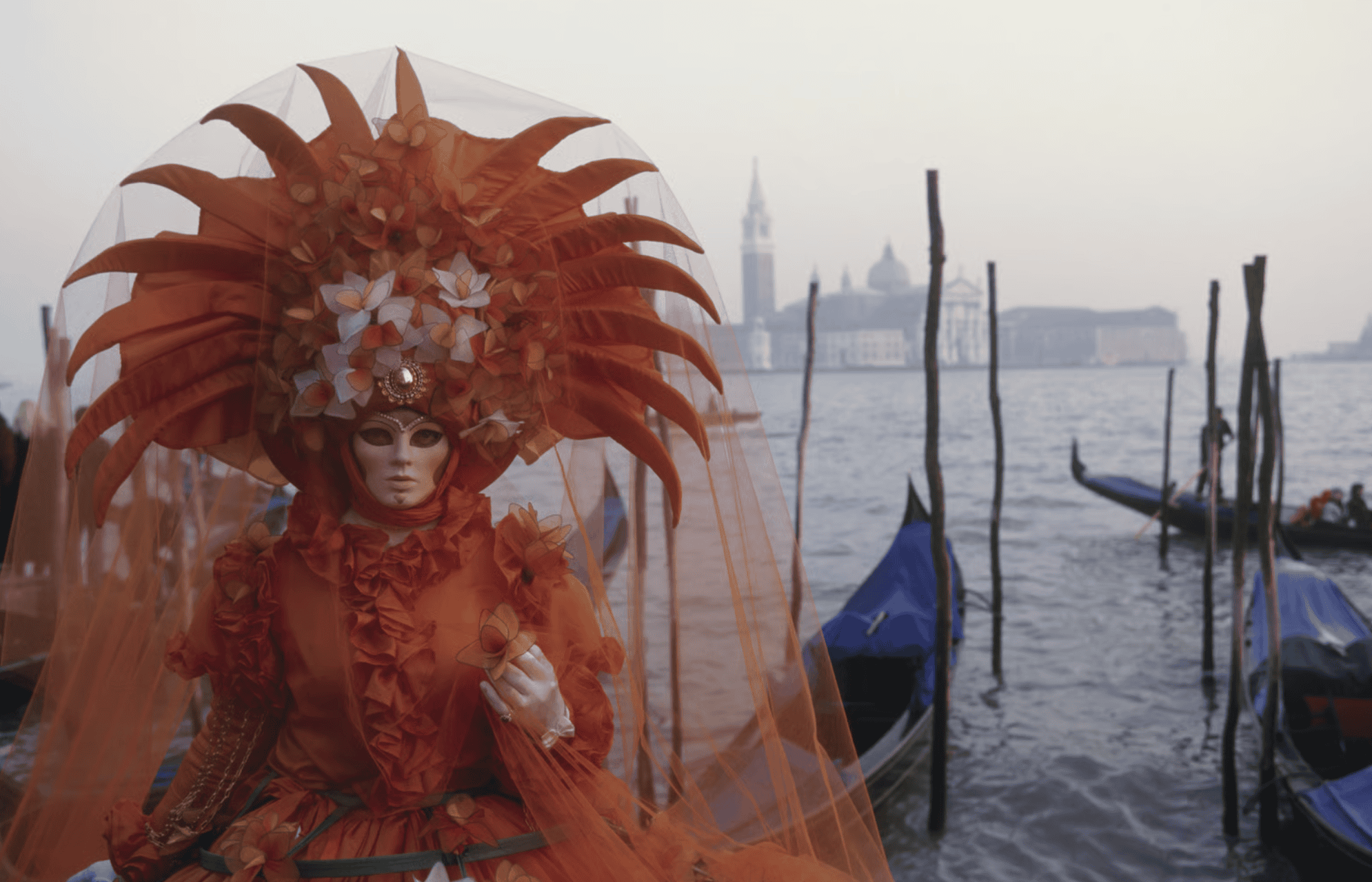
From 23 January to 9 February 2027, Venice will once again transform into a vast open-air theatre, filled with masks, performances and centuries-old traditions.
There are moments of the year when Venice seems to change its very nature. Its narrow streets become theatrical wings, its squares turn into stages, and behind every mask there may be a character who seems to have stepped out of another era.
This is the Venice Carnival, one of the city’s best-known and most fascinating events, returning in 2027 from 23 January to 9 February. For more than two weeks, Venice will once again exist somewhere between reality and performance, amid costumes, music, events and unexpected encounters. Carnival is much more than a celebration: it is one of those moments when the city most powerfully rediscovers the theatrical dimension that has been part of its identity for centuries.
Experiencing it while staying on the Venice Lido also offers the chance to discover another side of the lagoon: one where the vitality of the historic centre is balanced by the winter sea, open spaces and a slower pace.
Venice Carnival 2027: the dates
The 2027 edition of the Venice Carnival will take place from Saturday 23 January to Tuesday 9 February, Shrove Tuesday and the traditional final day of the celebrations. The full programme will gradually be announced as the event approaches and will once again bring performances and activities to different areas of the city.
Among the events already announced is the Official Dinner Show, hosted in the halls of Ca’ Vendramin Calergi, a historic palace overlooking the Grand Canal. The evenings open to the public are scheduled for 30 and 31 January and then from 4 February, Shrove Thursday, through to 9 February.
It is an event that recalls one of the most fascinating aspects of Venetian tradition: parties held inside historic palaces, period costumes, music and evenings in which every guest becomes part of the show.
Yet during Carnival, it is not only the official events that transform Venice. Very often, simply walking through the city is enough to truly become part of the celebration.
When Venice becomes a stage
A masked figure slowly crosses a bridge. An eighteenth-century costume appears at the end of a narrow street. A group of people gathers in a square to admire a particularly elaborate outfit. During Carnival, scenes like these become part of everyday life.
St Mark’s Square naturally remains one of the symbolic locations of the event, but just a few streets away from the main routes, entirely different atmospheres can be discovered. The charm of the Venice Carnival also lies in chance encounters, reflections on the water and costumes that seem to suddenly appear among the city’s architecture.
The boundary between spectator and participant becomes blurred. And this is precisely what makes the Venice Carnival different from many other events: there is no single stage. Venice itself is the stage.
A tradition spanning the centuries
The origins of the Venice Carnival are ancient. The first records of celebrations date back to the end of the 11th century, while in the centuries that followed Carnival gradually became one of the most important events in the life of the Venetian Republic.
At the time, masks had a meaning that went far beyond simple disguise. Hiding one’s face made it possible to temporarily suspend identities, roles and social differences. For a limited period of the year, the rules of everyday life seemed to loosen and Venice became a place of play, performance and anonymity. Parties, shows, music and encounters filled its streets, squares and palaces.
After a long interruption, the modern Carnival was officially revived in 1979. Since then, Venice has gradually rediscovered and reinterpreted this tradition, transforming it into an event known throughout the world.
And yet, despite its international dimension, the fascination of Carnival remains closely connected to the city itself: its architecture, its light, its water and that feeling of being in a place where past and present seem to continually overlap.
From Carnival to the sea: the Lido in winter
Then comes the moment to cross the lagoon. The vaporetto leaves the historic centre behind and, little by little, the landscape changes. Monumental architecture gives way to a more open setting, and on the horizon the Venice Lido comes into view.
In winter, the island reveals a very different character from the one seen during the summer season. The beaches become quiet, the seafront invites long walks and the Adriatic accompanies the days with colours and atmospheres found only during the colder months.
It is precisely this contrast that makes staying on the Lido during Carnival so distinctive. On one side are the crowded streets, costumes, performances and vitality of Venice. On the other, the sea, open spaces and an environment where life slows down.
You can spend the day at the heart of the celebrations and return to the Lido in the evening. Or begin the morning on the island with a walk along the seafront before crossing the lagoon and reaching the historic centre.
Within just a few minutes, one atmosphere gives way to another. Two apparently very different experiences that nevertheless belong to the same journey.
Discovering the Lido beyond Carnival
Choosing the Lido as a base also provides the opportunity to explore places that are less familiar than the most visited parts of Venice.
At the southern end of the island, Malamocco still preserves the layout and atmosphere of an old lagoon village, with narrow streets, small bridges and views over the water that tell a different story from the monumental Venice of the historic centre.
Continuing towards Alberoni, the landscape changes once again. The lagoon meets the sea, natural areas replace buildings and Venice reveals one of its lesser-known sides.
Carnival can therefore become the starting point for a broader journey. Not only through Venice, but through its different landscapes: St Mark’s Square and its palaces, the small squares away from the busiest routes, the lagoon and, finally, the sea.
Another way to experience the Venice Carnival 2027
The Venice Carnival 2027 will once again be an opportunity to watch the city transform. From 23 January to 9 February, masks, costumes and performances will return to Venetian spaces, bringing to life a tradition that spans centuries of history.
But to truly discover Venice, it is worth looking beyond the celebrations. Following the movement of the city, and then stepping away from it. Crossing the lagoon and changing perspective.
When the vaporetto leaves Venice behind, the lights of the historic centre slowly begin to fade into the distance. On the other side lies the Lido.
The winter sea, the silence and another way of experiencing Venice.
Venice Film Festival 2026: the Venice 83 programme unveiled
Venice Architecture Biennale 2027: dates and theme of the 20th International Architecture Exhibition