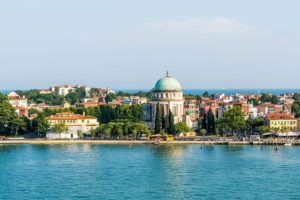
Secret Venice: unusual places to discover between Venice and the Lido

Venice is a city that seems endless. Beyond the best known itineraries and iconic landmarks, there is a secret Venice made of silent islands, hidden architecture, places suspended in time and corners that many visitors never get to see. All it takes is moving away from the main routes to discover a different city: slower, more authentic and mysterious.
One of the most curious places in hidden Venice is the Scala Contarini del Bovolo, tucked away among the narrow streets near Campo Manin. From the outside it almost goes unnoticed, but once inside the small courtyard an extraordinary spiral staircase appears, blending Gothic, Renaissance and Byzantine elements. Reaching the top offers an unusual view over Venice, far from the crowded panoramic spots.
Among the unusual places to visit in Venice there is also the Libreria Acqua Alta, a space famous for its unconventional atmosphere. Books are stored inside gondolas, bathtubs and old boats to protect them from high water. The small courtyard at the back, with its staircase made from discarded books, is one of the city’s most original corners.
To experience a more authentic Venice, it is worth exploring Cannaregio and Castello, districts where daily life still follows the rhythm of local residents. Here you will find quiet fondamenta, hidden courtyards and small bacari frequented by Venetians. Wandering without a destination reveals secondary bridges, silent reflections in the canals and a completely different dimension compared to the busiest tourist areas.
Another little known place is the Giardino delle Vergini, in the eastern part of Castello. Venice is not famous for its green spaces, and that is exactly what makes this place even more unique. The silence, the closeness to the lagoon and the vegetation create an almost unreal atmosphere.
Among the most mysterious places in the lagoon stands Poveglia, an island located between Venice and the Lido. Over the centuries it was used as a quarantine station during epidemics and later as a hospital. Today it is abandoned and surrounded by stories and legends that have contributed to its enigmatic reputation.
The Lido of Venice itself preserves some of the lagoon’s most surprising and lesser known places. Often associated only with beaches or the Venice Film Festival, the Lido actually hides a quieter and more authentic side made of nature, Liberty architecture, fortifications and small historic villages.
One of the most fascinating places is Malamocco, an ancient settlement that predates medieval Venice. Time seems to stand still here: narrow streets, colorful houses, small canals and peaceful squares recreate the atmosphere of a lagoon village far from mass tourism. Walking through Malamocco means discovering an intimate and almost secret Venice.
Heading south, you reach Alberoni, one of the most distinctive natural areas of the Venetian lagoon. Here the landscape changes completely: dunes, pine forests, wild beaches and silence replace the classic image of Venice. The area is also home to the WWF Oasis of the Alberoni Dunes, one of the most valuable natural environments along the Venetian coast.
Also located in the Alberoni area are the Murazzi, the historic sea defenses built in Istrian stone by the Republic of Venice to protect the lagoon from sea erosion. Walking along this stretch, especially out of season, allows visitors to experience a very different side of the Lido, almost suspended between sea and lagoon.
Few people know about the Ottagoni of the lagoon, ancient fortifications built by the Serenissima to defend Venice from invasions by sea. Among them are the Ottagono Poveglia and the Ottagono Alberoni, artificial geometric structures emerging from the lagoon like mysterious and almost unreal places. Even today they remain one of the most unusual testimonies of Venice’s defensive system.
Among the most surprising destinations near the Lido there is also San Lazzaro degli Armeni, a small island that houses one of the most important centers of Armenian culture in the world. The monastery contains a library with thousands of ancient volumes, rare collections and extraordinary historical testimonies. The island can be visited through guided tours organized by the monks and represents one of the lagoon’s most fascinating cultural sites.
The true secret Venice, however, is not found only in hidden places. It lives above all in the experience of getting lost. Walking through an unknown calle, stopping in front of a silent canal, watching the lagoon at sunset or discovering a small campiello away from the crowds allows visitors to grasp the city’s most authentic soul.
It is precisely far from the most predictable itineraries that Venice still continues to amaze.
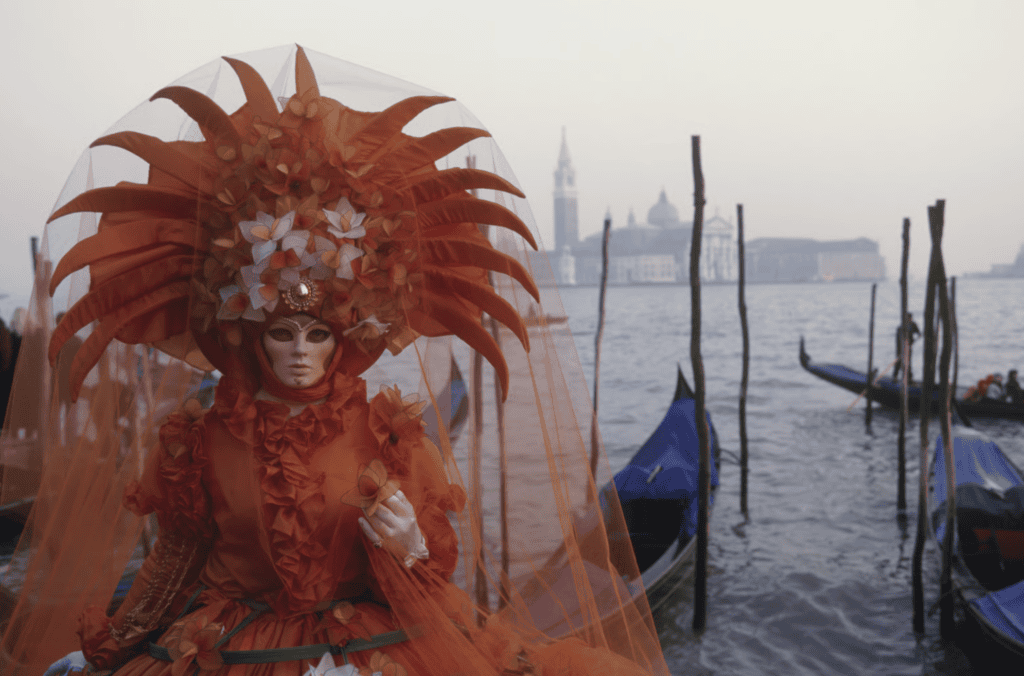
Venice Carnival 2027: dates, traditions and magic between Venice and the Lido

Venice Film Festival 2026: the Venice 83 programme unveiled